Sports massage is not just deep tissue massage.
Yet it’s often marketed that way — as a harder, more intense session meant to “work out knots.” The truth is, sports massage is a strategic, purpose-driven form of manual therapy, and its effectiveness depends heavily on when and how it’s applied.
At Star Dynamic Wellness, we emphasize the critical differences between pre-event sports massage and post-event sports massage, because each plays a unique role in performance, recovery, and injury prevention.
What Is Sports Massage — Really?
Sports massage is a specialized manual therapy designed to support athletic performance, physical activity, and recovery. Unlike relaxation massage, it is guided by:
Activity demands
Training or competition timing
Muscle function and biomechanics
Nervous system state
When done correctly, sports massage enhances readiness before activity and accelerates recovery afterward.
Pre-Event Sports Massage: Preparing the Body for Performance
A pre-event sports massage is designed to stimulate, not relax. Over-relaxing muscles before activity can decrease power output, reaction time, and coordination.
Goals of Pre-Event Sports Massage:
Increase muscle readiness and activation
Improve circulation to working muscles
Enhance mobility without reducing stability
Prime the nervous system for performance
How Pre-Event Massage Is Performed:
Lighter to moderate pressure
Faster, rhythmic techniques like spindle-cell activation
Compression, mobilization, and sport-specific focus
Shorter sessions, often performed close to competition
Kinesio-taping for supporting pain reduction and movement of fluids through an affected area
This type of massage helps transition the body from rest into optimal performance mode, reducing injury risk and improving movement efficiency.
Post-Event Sports Massage: Supporting Recovery and Healing
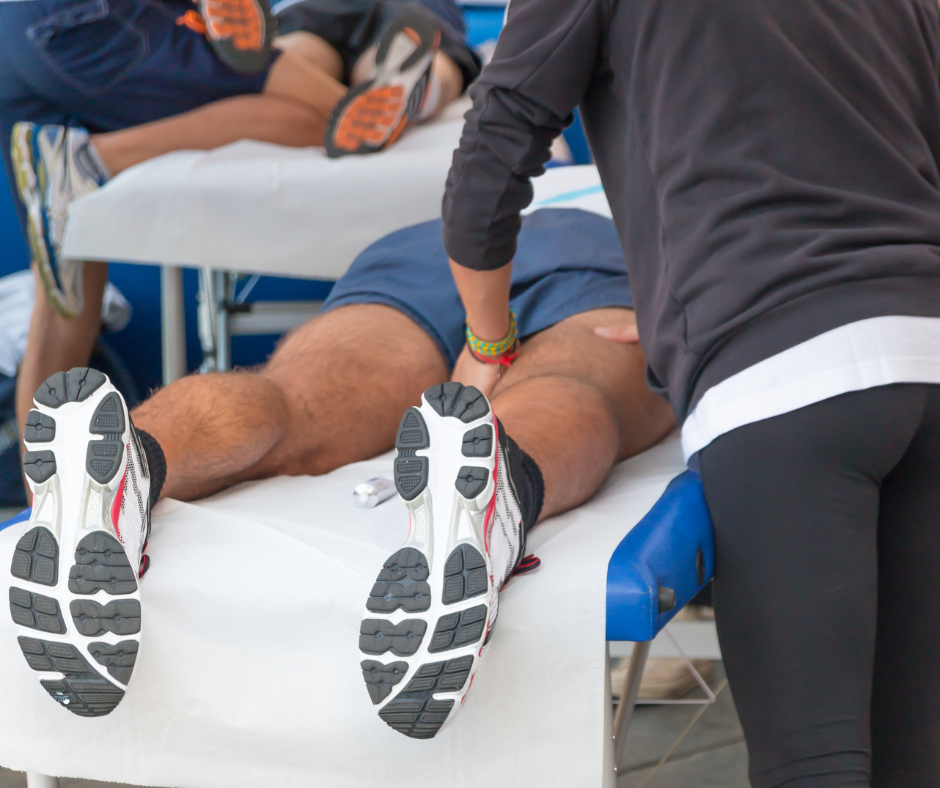
A post-event sports massage has a completely different objective: recovery.
After physical exertion, muscles are fatigued, circulation may be compromised, and metabolic waste has accumulated. The nervous system also needs help shifting out of a high-alert state.
Goals of Post-Event Sports Massage:
Improve circulation and lymphatic flow
Assist in flushing metabolic byproducts, including lactic acid
Reduce muscle cramping, tightness, and guarding
Calm the nervous system
Identify areas of strain before they develop into injuries
How Post-Event Massage Is Performed:
Slower, more deliberate techniques
Flushing strokes and gentle stretching
Targeted work for cramps and overworked muscles
Pressure adjusted based on tissue response and soreness
Use of Red Light Therapy to promote faster healing
Post-event massage supports faster recovery, reduced soreness, and improved long-term performance.
Sports Massage vs. Deep Tissue Massage
One of the most common misconceptions is that sports massage equals deep tissue massage.
While deep tissue work may be used at times, depth alone does not define sports massage. Without proper timing and intent:
Deep pressure before an event can reduce performance
Aggressive work after competition can increase inflammation
Effective sports massage is about precision, timing, and purpose, not intensity.
Why Proper Sports Massage Matters
When pre- and post-event massage are applied correctly, they can:
Improve performance
Reduce injury risk
Shorten recovery time
Support consistent training and activity
At Star Dynamic Wellness, we assess where your body is in the performance cycle before deciding how to treat it — ensuring the right technique is used at the right time.
Experience Intelligent Sports Massage
Whether you’re an athlete, fitness enthusiast, or someone who simply moves their body hard, sports massage should work with your physiology — not against it.
If you’re ready to move beyond generic deep tissue work and experience sports massage the way it’s meant to be practiced, our team is here to help.