When Alignment Isn’t the Whole Story: How Applied Neurology Is Changing My Approach to Manual Therapy

For years, my work with clients has centered around a fundamental question: Why isn’t this body moving the way it should?

As an osteopathic manual therapist and Master Myoskeletal Therapist, I’ve spent years learning how to assess movement, identify dysfunctional patterns, address restrictions, and help the body find a better sense of balance and alignment. That approach has helped a lot of people, and it continues to be a major part of how I work.

But over time, I started noticed there were some clients I would make consistent progress with for a while and then hit a plateau. The body would improve, but only so much. Those plateaus became some of the most interesting cases for me because they forced me to ask a deeper question: What if the problem isn’t where the restriction appears to be?

That question has led me deeper into the world of applied neurology. More importantly, it has changed the way I look at my clients and the way I approach the assessment process.

The Brain is Part of the Movement System

We often think about movement in mechanical terms. A joint moves. A muscle contracts. A tissue becomes restricted. A body gets “out of alignment.” We address the restriction, improve the mobility, strengthen the weak area, and expect the movement pattern to improve.

Sometimes it does.

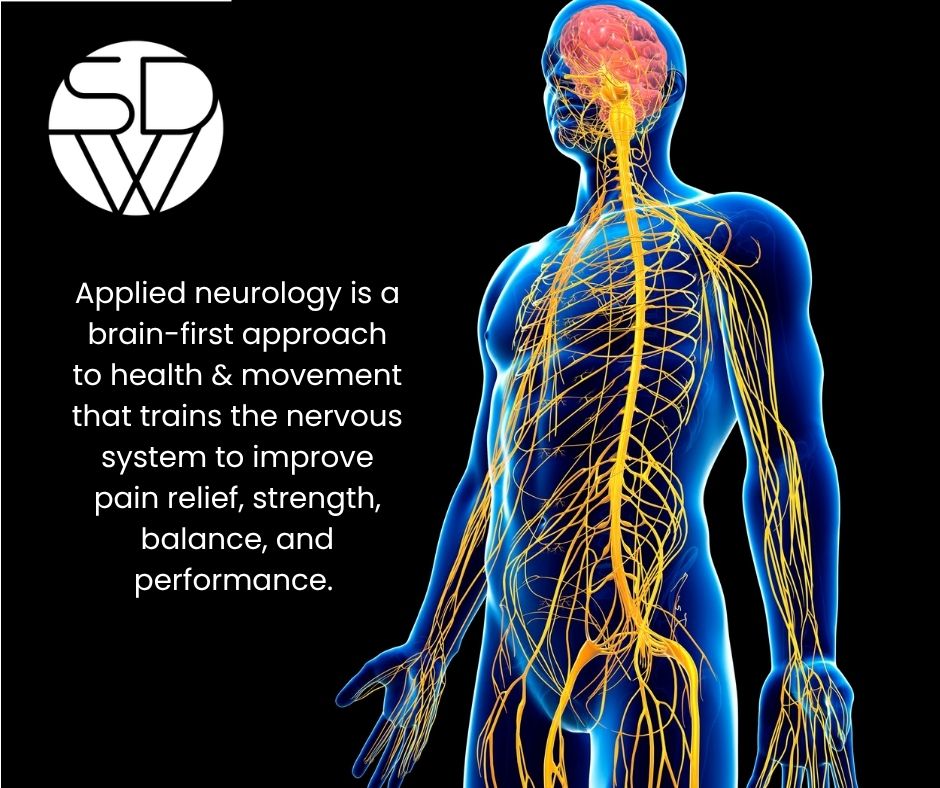
But movement isn’t purely mechanical. Every movement you make is being organized and influenced by your nervous system. Your brain is constantly receiving information from your eyes, inner ear, joints, muscles, skin, and other sensory systems and using that information to determine how your body should respond.

That means the nervous system can influence what looks like a purely muscular, joint, or structural problem.

This is where applied neurology has become such a powerful addition to my work. Rather than looking at the body solely from a structural perspective, I can also consider the neurological inputs that may be influencing what I’m seeing.

For me, the important part isn’t simply learning a collection of neurological assessments and exercises. It’s learning to look at the body differently.

applied neurology The goal is to find the most appropriate input for the individual in front of me.

Applied Neurology as an Overlay, Not a Replacement

I don’t view applied neurology as replacing osteopathic manual therapy, Myoskeletal Alignment Techniques, movement assessment, or the other tools I’ve spent years developing. I see it as an overlaying filter—another lens through which I can evaluate the same client.

I can still look at someone’s pelvis, spine, shoulders, hips, feet, gait, breathing, and overall movement strategy. But now I can also ask additional questions.

What information is the nervous system receiving? Is the brain getting the information it needs to feel safe and confident with a particular movement? Could the visual system be influencing the movement pattern I’m seeing? Could the vestibular system be contributing? Is there a sensory mismatch somewhere in the system?

Most importantly, I can begin asking whether the limitation I’m seeing is actually a structural restriction—or whether the nervous system is creating a protective movement strategy.

Those questions can completely change where I look next.

Sometimes the Problem Is Somewhere You Wouldn’t Expect

One of the most fascinating aspects of applied neurology is discovering that the location of a problem isn’t necessarily the location of the solution.

For example, I may have a client who presents with limited rotation through the neck. Traditionally, my assessment might lead me toward the cervical spine, surrounding musculature, thoracic spine, ribs, or shoulders. And those things still matter.

But now I have additional questions. What happens to that neck rotation when we change visual input? What happens when we change the position of the head relative to the environment? What happens when we influence another sensory system?

If the movement suddenly improves, I’ve learned something important. The original limitation may not have been entirely structural. The nervous system was part of the equation.

That doesn’t mean the client’s neck wasn’t restricted. It means there may have been another piece of the puzzle contributing to why that restriction existed in the first place.

And that gives me another pathway to explore.

Ready to Start Your Massage Therapy Path?

We'd love to guide you. Explore our 4 Integrated Wellness massage therapy paths.

The Power of Assess, Intervene, Reassess

One of the principles I particularly appreciate about this approach is the emphasis on assessment and immediate reassessment.

Instead of simply assuming that an intervention should work, we can test it. We measure something, apply an appropriate input, and then measure again.

Did the range of motion change? Did strength change? Did balance improve? Did coordination improve? Did the client’s perception of the movement change?

If it did, we’ve learned something.

If it didn’t, that’s useful information, too.

It tells us to keep looking.

This creates a much more dynamic treatment process. I’m not simply applying techniques because a particular muscle “should” be tight or because a particular joint “should” be restricted. I’m constantly looking for the body’s response and using that response to help guide what comes next.

In other words, I’m not just treating what I see. I’m testing my assumptions.

From “Where Is the Problem?” to “Why Is the Body Doing This?”

This may be the biggest shift in my thinking.

Traditional manual therapy can sometimes encourage us to focus heavily on the location of a client’s symptoms. Where does it hurt? Where is the restriction? Which muscle is tight? Which joint isn’t moving?

Those are important questions, but I’ve become increasingly interested in another one:

Why is the body creating or maintaining this particular movement strategy?

That distinction matters because if I only address the area producing the symptoms, I may temporarily change the output without addressing the reason the body produced that output in the first place.

When I can identify a meaningful sensory or neurological contributor, I may be able to change the information being presented to the nervous system. Sometimes that creates a remarkably different response.

This doesn’t mean every problem is neurological. It doesn’t mean structural or mechanical factors don’t matter. Quite the opposite. It means I’m now able to consider both sides of the equation.

The Goal Isn't to Make Therapy More Complicated

If anything, my goal is the opposite.

I don’t want clients to need more therapy. I want to become better at determining what they actually need.

More techniques don’t necessarily mean better therapy. More information doesn’t necessarily mean better therapy. The goal is to find the most appropriate input for the individual in front of me.

Sometimes that’s manual therapy.

Sometimes it’s movement.

Sometimes it’s breathing.

Sometimes it’s strengthening.

Sometimes it’s a change in how the client is using their eyes or interacting with their environment.

And sometimes it’s a combination of several of these.

The nervous system doesn’t exist separately from the musculoskeletal system. It’s the system coordinating everything.

A More Complete Picture of the Human Body

My approach to manual therapy continues to evolve.

The foundation I’ve built through osteopathic manual therapy and Myoskeletal Alignment Techniques remains incredibly important to my work. But applied neurology has given me another dimension to consider. It has helped me become more curious about the inputs driving the body’s outputs, given me new ways to investigate stubborn problems, and helped me recognize when I may be looking in the wrong place.

For clients who have tried everything, people who keep experiencing the same problem, athletes who can’t quite break through a performance plateau, or anyone who feels like their body simply isn’t responding the way it should, sometimes the answer isn’t another treatment directed at the same place.

Sometimes we need to change the question.

That’s what applied neurology has encouraged me to do.

When I combine that neurological perspective with the alignment, movement, and manual therapy work I’ve spent my career developing, I have a much more comprehensive way of looking at the human body.

The body is not just a collection of muscles, bones, and joints. It’s a dynamic system constantly receiving, interpreting, and responding to information.

The better we understand that conversation between the brain and the body, the better we can help the body move, adapt, and perform.

Ready to Find Your Missing Piece?

If you’ve been dealing with a persistent movement problem, recurring pain, or a plateau that you just can’t seem to break through, it may be time to look at the problem from a different angle.

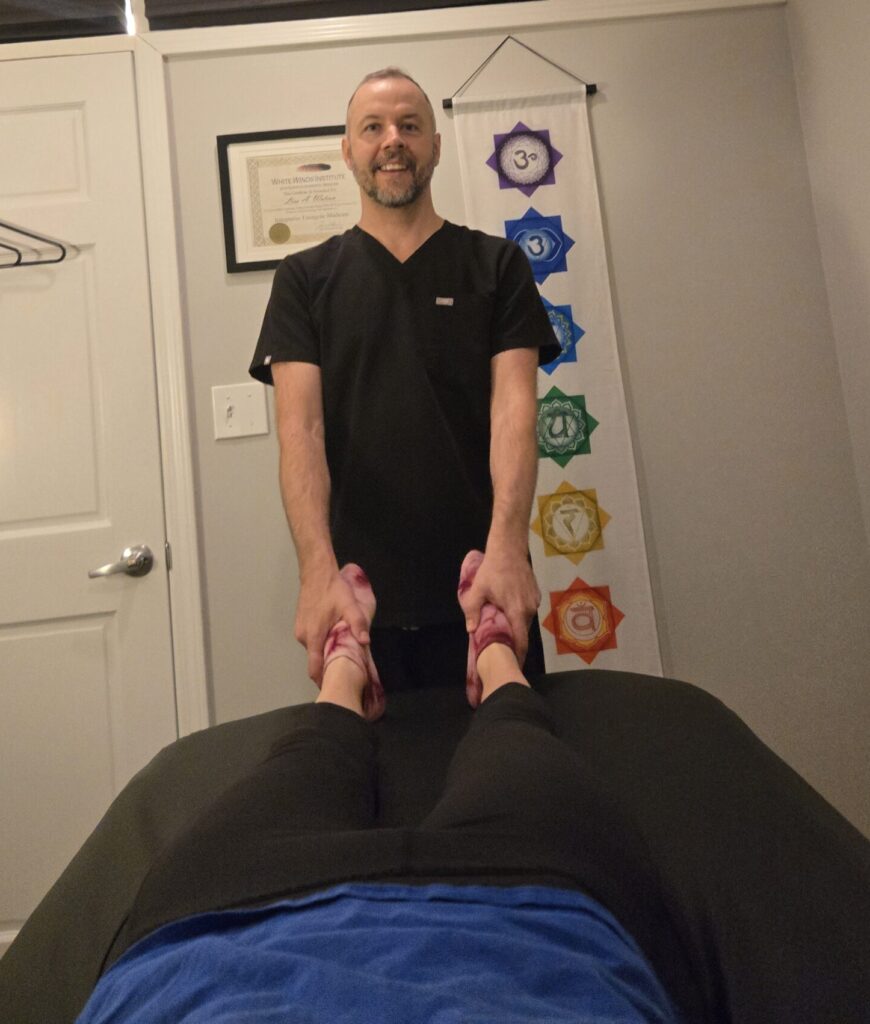
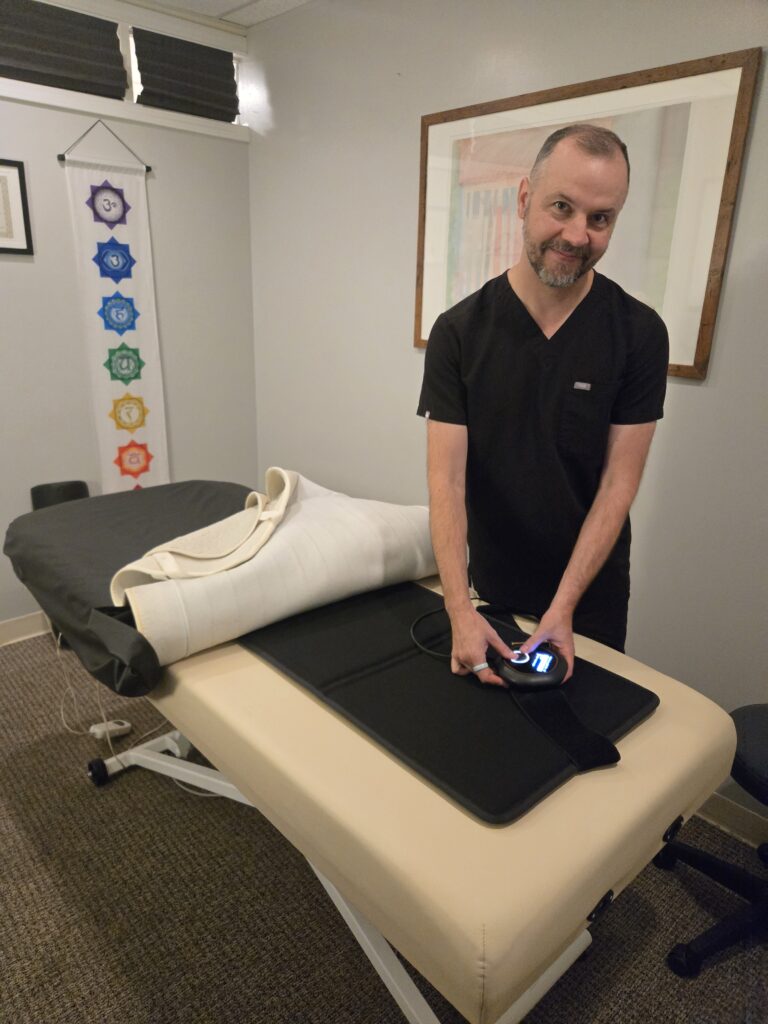
At Star Dynamic Wellness, I combine osteopathic manual therapy, Myoskeletal techniques, movement assessment, and an applied-neurology perspective to create a more individualized approach to care.

Sometimes the key to moving forward isn’t working harder on the same problem.

It’s finding the piece we’ve been missing.

Our Four Paths for Integrated Wellness

🍃 Soothe For when the world has been too loud, too fast, or too much.

The Soothe path is your permission to exhale. Whether you’re carrying the weight of chronic stress, navigating anxiety, or simply running on empty, this path is designed to bring your nervous system out of overdrive and into rest. Expect deeply calming, restorative work — a session that says, you’re safe, you can let go now.

🎯 Tune For athletes and active bodies ready to perform at their best.

The Tune path is built for those who are already moving well and want to move even better. Whether you’re training for a competition, working through performance plateaus, or dialing in the fine details that separate good from great, this path focuses on optimizing how your body functions. We work with precision here — identifying subtle imbalances, improving mobility and mechanics, and making sure every system is firing the way it should so you can show up at full capacity.

🧩 Align For when your physical structure needs to come back into balance.

The Align path draws on osteopathic principles to address the body’s framework — bones, joints, fascia, and the way it all fits together. If you’re dealing with postural issues, structural imbalances, or tension patterns that keep pulling you out of true, this is the path for you. The work here is precise and grounding, helping restore the kind of alignment that lets your whole body function the way it was designed to.

➕ Repair For healing after injury, surgery, or a physical setback.

The Repair path is for those in active recovery — coming back from an injury, post-surgical rehabilitation, or rebuilding strength and function after a physical trauma. This is focused, therapeutic work that supports your body’s natural healing process, helping reduce pain, restore range of motion, and rebuild resilience so you can return to the life and activities you love.

You might also like...