More Than Flexible: Understanding Pain and Movement in Hypermobile Bodies

If you live with hypermobility, you may have heard some version of the same advice over and over again: “You’re just really flexible.” But for many people with Hypermobility Spectrum Disorder (HSD) or Ehlers-Danlos Syndrome (EDS), being flexible is only part of the story. You may have spent years dealing with recurring neck pain, low back pain, shoulder problems, joint pain or muscles that seem to tighten and spasm for no obvious reason. You may have tried massage, stretching, chiropractic adjustments, strengthening programs or physical therapy—usually with varied results, but hopefully at least sometimes with temporary relief.

As an osteopathic manual therapist, I see many people who are looking for a different approach. And I understand the challenge personally. I live with HSD myself, along with some of the other systemic issues that can accompany hypermobility. So while my clinical approach is based on my training and experience as an osteopathic manual therapist, my understanding of hypermobility also comes from living in a body that behaves this way.

Hypermobility Isn't Simply About Being Flexible

One of the misconceptions about hypermobility is that if a person has excessive range of motion, the answer must be to stretch less or strengthen more. It isn’t quite that simple. A hypermobile joint may have plenty of available movement but still lack the muscular coordination and neurological control necessary to stabilize that movement effectively.

Think about the difference between having access to movement and having control over movement. Those are not the same thing. When a joint doesn’t feel stable, the body may respond by increasing muscle tension around it. Muscles can become protective, movement may become less efficient, and over time, the nervous system can begin to associate certain movements or positions with danger or threat. The result can be a frustrating cycle of instability, protective muscle tension, altered movement and pain, which can lead to even more protection. Breaking that cycle requires more than simply pushing harder into a stretch or trying to strengthen one isolated muscle.

What Makes My Therapeutic Approach to HSD & EDS Different

When I work with someone who has HSD or EDS, my goal isn’t to force a joint into a particular position. There are no high-velocity adjustments. Instead, osteopathic manual therapy allows me to work with the body’s tissues and movement patterns in a more specific and controlled way. I’m interested in how the joints, muscles and connective tissues are interacting and, importantly, how the person is controlling that movement.

Sometimes the most useful thing we can do isn’t to create more movement. It’s to help the body feel more confident and controlled within the movement it already has. That distinction can be particularly important for someone who is already very mobile

Strengthening Isn’t Just About Isolating Muscles – It Requires Coordination

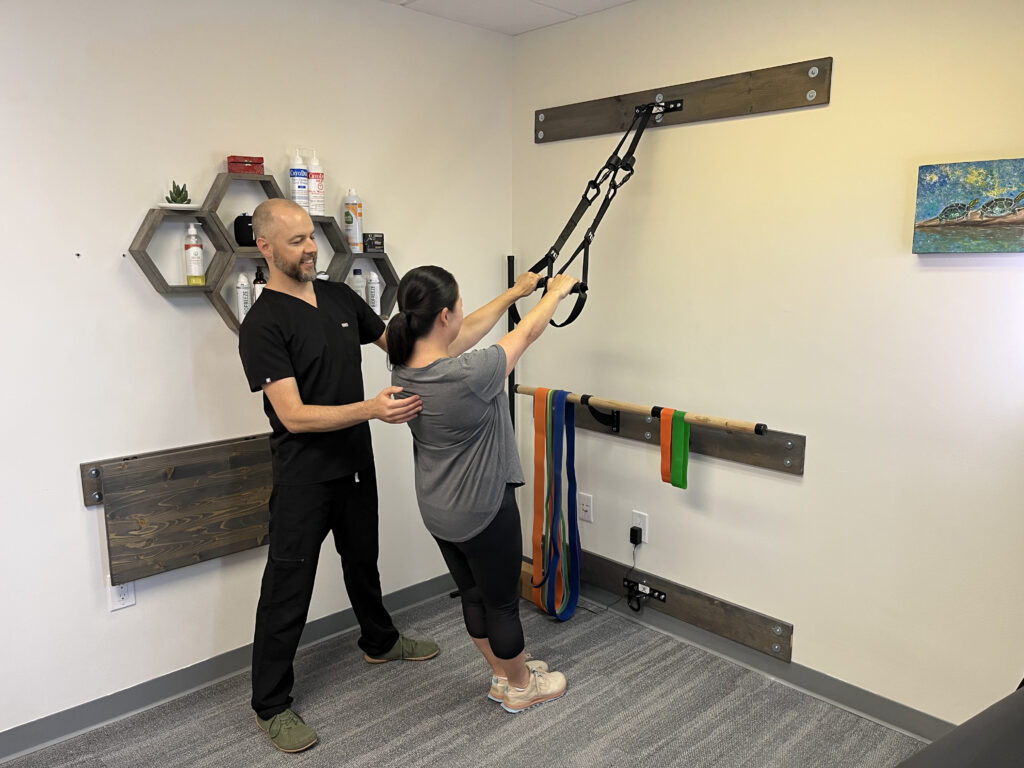
Another important part of my approach is strengthening. But when I say “strengthening,” I’m not necessarily talking about sitting in a gym and isolating one muscle over and over again.

For someone with hypermobility, I often want to know: Can your body coordinate the muscles around a joint when you actually move?

A muscle can test strong in isolation and still fail to contribute effectively when the body is performing a more complex movement. That’s why I tend to emphasize functional movement and motor control. Rather than simply asking whether a particular muscle is strong, we’re looking at how the body uses that muscle as part of a larger movement strategy. The goal is not just more strength; the goal is better control.

Ready to Choose Your Massage Therapy Path?

We'd love to guide you. Explore our 4 Integrated Wellness massage therapy paths.

Every Hypermobile Person Is Different

Perhaps the most important thing to understand about HSD and EDS is that there isn’t one universal treatment approach. Two people can have the same diagnosis and completely different movement strategies, pain patterns and physical needs. One person may need more stability. Another may need better proprioception. Someone else may have developed significant protective tension around a joint. And another person may primarily need to rebuild confidence in movement after years of experiencing pain.

That’s why I don’t approach hypermobility with a predetermined sequence of techniques. I assess the person in front of me. We look at how they move, where they have difficulty, how their body is compensating and what their nervous system may be telling us. Then we work together to find a strategy that makes sense for their body.

hypermobility exercises include strength and stretching

You Don't Have to Stop Moving

For many people with HSD or EDS, years of pain can create fear around movement. That is understandable. If movement repeatedly hurts, the natural response is to move less. But the long-term goal shouldn’t necessarily be to protect the body from movement. It should be to help the body become more capable of movement.

That means building strength, coordination, stability and confidence while respecting the unique way a hypermobile body moves. You don’t necessarily need to become less mobile. You may simply need to become better at controlling the mobility you already have.

A Different Way Forward

If you’ve been told that your pain is simply because you’re “too flexible,” or if you’ve spent years bouncing between treatments without finding a lasting strategy, there may be value in looking at the problem from a different perspective.

At Star Dynamic Wellness, my approach to working with people with HSD and EDS combines osteopathic manual therapy, functional movement, neuromuscular assessment and applied neurological techniques. The goal isn’t to force your body into a particular position. It’s to understand how your body is currently working—and help you develop better options.
More movement isn’t always the answer. More force isn’t always the answer. Sometimes the answer is better information, better control and a nervous system that feels safe enough to move.

If you’re living with hypermobility and persistent pain, I’d be happy to help you explore whether this approach may be appropriate for you. Book an integrated wellness session with me in Decatur or Sandy Springs. 

Finding supportive, knowledgeable care is essential when managing hypermobility and connective tissue disorders. The Ehlers-Danlos Society is a global non-profit organization dedicated to advancing research, education, advocacy, and community support for individuals living with Ehlers-Danlos syndromes (EDS) and hypermobility spectrum disorders (HSD).

For those looking for care tailored to hypermobile bodies, Scott Oglesbay is listed as a healthcare professional in The Ehlers-Danlos Society Healthcare Professionals Directory. Explore their extensive patient resources, webinars, and global support networks to learn more.

Our Four Paths for Integrated Wellness

🍃 Soothe For when the world has been too loud, too fast, or too much.

The Soothe path is your permission to exhale. Whether you’re carrying the weight of chronic stress, navigating anxiety, or simply running on empty, this path is designed to bring your nervous system out of overdrive and into rest. Expect deeply calming, restorative work — a session that says, you’re safe, you can let go now.

🎯 Tune For athletes and active bodies ready to perform at their best.

The Tune path is built for those who are already moving well and want to move even better. Whether you’re training for a competition, working through performance plateaus, or dialing in the fine details that separate good from great, this path focuses on optimizing how your body functions. We work with precision here — identifying subtle imbalances, improving mobility and mechanics, and making sure every system is firing the way it should so you can show up at full capacity.

🧩 Align For when your physical structure needs to come back into balance.

The Align path draws on osteopathic principles to address the body’s framework — bones, joints, fascia, and the way it all fits together. If you’re dealing with postural issues, structural imbalances, or tension patterns that keep pulling you out of true, this is the path for you. The work here is precise and grounding, helping restore the kind of alignment that lets your whole body function the way it was designed to.

➕ Repair For healing after injury, surgery, or a physical setback.

The Repair path is for those in active recovery — coming back from an injury, post-surgical rehabilitation, or rebuilding strength and function after a physical trauma. This is focused, therapeutic work that supports your body’s natural healing process, helping reduce pain, restore range of motion, and rebuild resilience so you can return to the life and activities you love.

You might also like...